The Aspen Skiing Company's vision for Aspen Highlands just got a lot bigger. A 140-page master development plan submitted to the U.S. Forest Service late last year and now under active review proposes replacing two of the mountain's oldest lifts, adding a new mid-mountain chair and, most dramatically, building a 10-person gondola that would rise 2,750 vertical feet to the legendary Cloud Nine Alpine Bistro.
The plan, which surfaced publicly this month, also floats the idea of connecting some or all of Aspen's four ski mountains via aerial tramways. It is the most ambitious infrastructure proposal for the Roaring Fork Valley in decades, and real estate professionals across the region are already weighing what it could mean for property values.
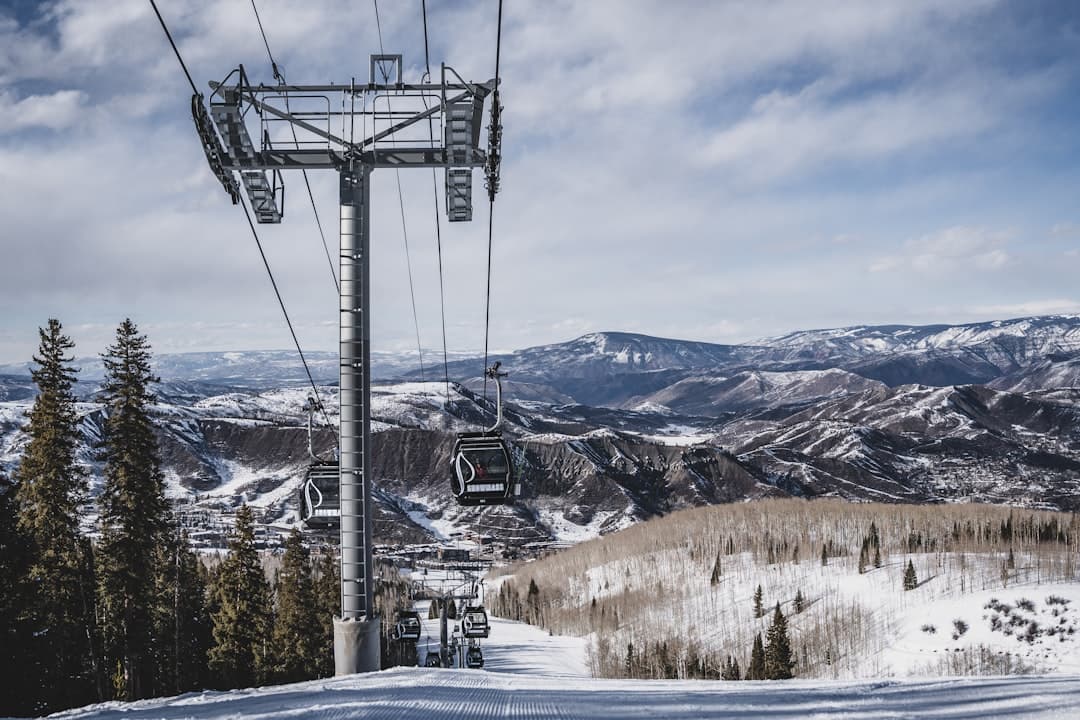
At the center of the proposal is the Maroon Bells Gondola, a two-stage, 10-person cabin system that would replace the aging Exhibition quad chairlift. The gondola would include a mid-station near the current Exhibition top terminal with full cabin parking, then continue upward to Cloud Nine at 10,840 feet of elevation. The route would cover just under 12,000 feet of slope length.
Both the Merry-Go-Round restaurant at the mid-station and Cloud Nine at the top would be expanded under the plan, with the potential to open year-round. That last detail matters. Year-round gondola operations would transform Highlands from a winter-only destination into a four-season draw, bringing summer hikers, diners and sightseers to terrain that currently shuts down each April.
Over the past 10 seasons, Aspen Highlands has averaged roughly 210,000 skier visits annually, with occasional bottlenecks in the base area and limited lift redundancy. The master plan addresses both issues. In addition to the gondola, the Thunderbowl triple chairlift would be upgraded to a detachable quad, boosting capacity from 1,200 to 1,800 skiers per hour. A brand-new Apple Strudel lift would serve mid-mountain terrain and provide backup if the gondola goes down.
The Forest Service is expected to complete its initial review by early summer. Acceptance of the plan does not greenlight any individual project. Each upgrade would still require environmental analysis under the National Environmental Policy Act, plus land-use review by Pitkin County. The timeline for actual construction remains uncertain.
But the ambition is unmistakable. The plan's most provocative section discusses linking Aspen's four ski areas by aerial tramway. "The technology exists to connect ski areas by aerial tramways, and there are multiple successful examples of these systems in operation in both resort and urban contexts throughout Europe," the planning document states. While acknowledging the "tremendous challenge" posed by valley-floor logistics, it notes that connections from Highlands to Aspen Mountain, Buttermilk or valley nodes "may prove feasible in the nearer term."
For a market where the median single-family home already sits above $14 million, infrastructure investment of this scale does not exist in a vacuum. Proximity to ski lifts has always commanded a premium in the Roaring Fork Valley. Year-round gondola access, expanded dining and potential multi-mountain connectivity would almost certainly sharpen that premium, particularly for properties near the Highlands base area and along the Castle Creek corridor.
The timing is notable. Just this week, hotelier Stephane De Baets presented plans to the Snowmass Village Town Council to redevelop the Viewline Resort, Conference Center and Wildwood Lodge into a Ritz-Carlton property. The proposal calls for 150 hotel keys, 62 fractional units, 80 workforce housing units and expanded restaurant and retail space. De Baets, who also owns the St. Regis in Aspen and Redstone Castle, described the existing infrastructure as "obsolete" and argued that Snowmass deserves a 21st-century flagship hotel.
Taken together, the Highlands master plan and the Ritz-Carlton proposal paint a picture of a valley in transition. The era of relying on Aspen's name alone to justify record asking prices may be giving way to something more deliberate: a coordinated push to modernize the physical infrastructure that underpins the entire luxury market.
None of this is guaranteed. Master plans are wish lists with engineering studies attached. Regulatory review, public comment and financing all stand between concept and construction. But the signal is clear. The institutions and investors with the deepest stakes in the Roaring Fork Valley are betting that the next chapter of Aspen real estate will be built on lift towers, gondola cables and hotel brands, not just mountain views and $70 million listings.
For buyers watching the market, the message is straightforward: pay attention to where the infrastructure is going, because property values tend to follow.
Photo: Chase Baker / Unsplash