Miami's luxury real estate market has never been short on drama, but the past week delivered more than usual. A billionaire developer's end run around local zoning, a celebrity mansion flipping for a massive premium, and shifting dynamics in the broader market all landed within the same seven days.
The headline fight centers on the Fontainebleau Miami Beach, the iconic Collins Avenue hotel that has anchored Mid Beach since 1954. Owner Jeffrey Soffer wants to build a water park on the property, complete with water slides reportedly reaching 120 feet and a redesigned pool deck with cabanas. When neighborhood residents pushed back on grounds of traffic, noise and historic preservation, Soffer's team took the project to Tallahassee instead of the local board.
The strategy worked. Florida legislators passed HB 399 on March 14, the final day of the session, with a last-minute amendment allowing up to 20 percent of any "large destination resort" to be redeveloped with only administrative city approval, effectively stripping the Miami Beach Historic Preservation Board of its authority over the project. Senate President Ben Albritton confirmed that Governor DeSantis had "input" on the final version of the bill. Soffer has been a substantial political donor to DeSantis in the past.
Miami Beach is not taking it quietly. At a commission meeting on March 18, city officials voted to explore a potential lawsuit against the state. Mayor Steven Meiner called the legislation a blow to local governance. "I am disappointed that our zoning laws were preempted," he said. "We should be making the decisions, and it's increasingly being taken out of our hands." The bill now sits on the governor's desk. If he signs it by April 2, it takes effect immediately.
The Fontainebleau saga matters beyond the hotel itself because it raises a fundamental question for Miami Beach property owners: who controls the zoning that shapes their neighborhood? For buyers evaluating eight-figure waterfront investments, the answer to that question affects every block on Collins Avenue.
Meanwhile, single-family luxury sales continue to post strong numbers. The week's biggest residential trade was at 6480 Allison Road in Miami Beach, where a waterfront mansion once owned by Lil Wayne sold for $33.3 million. The rapper had sold the property in 2023 for $22.6 million, meaning the home gained roughly $10.7 million in value over three years. Built in 2017 on a 0.6-acre lot, the 10,300-square-foot estate includes seven bedrooms, nine full bathrooms, a pool and a private dock. Douglas Elliman's Cyril Matz listed the property at $36 million, and Dina Goldentayer, also with Elliman, brought the buyer. The sale marks the second most expensive transaction ever recorded on the island.
The broader Miami luxury market, according to a new report from The Agency's Steven Seigel, has entered what analysts are calling a "more balanced phase." The pace of price appreciation has slowed after several years of aggressive gains. In the $3 million to $10 million range, negotiation has become common and time on market has increased. Entry-level luxury between $1 million and $3 million still sees the strongest transaction volume, fueled by domestic migration and international demand. At the top of the market, properties above $10 million continue to move, supported by ultra-high-net-worth buyers less sensitive to interest rates and more focused on lifestyle, privacy and tax advantages.
Brickell's condo market reflects the same split. The median condo sale price sits at approximately $660,000 based on Q4 2025 closings, with buyers paying around $657 per square foot across the general market. New construction, including projects like Cipriani Residences Miami with pricing starting at $2.15 million, continues to pull demand from resale inventory. The result is a market that rewards new product and patience, while punishing dated buildings that have not kept pace with the branded-residence standard buyers now expect.
None of this week's developments exist in isolation. The Fontainebleau battle will test the limits of state preemption over local land use at a time when Miami Beach is already grappling with congestion, sea level concerns and a hospitality industry that keeps pushing density higher. The Allison Road sale confirms that waterfront single-family homes in prime locations continue to appreciate rapidly, regardless of what the broader condo market does. And the market-wide shift toward selectivity means that both buyers and sellers are adjusting expectations in real time.
For those watching Miami's luxury market from the outside, the week offers a clear message: the money is still coming, but the rules governing where and how it gets deployed are changing faster than most people realize.
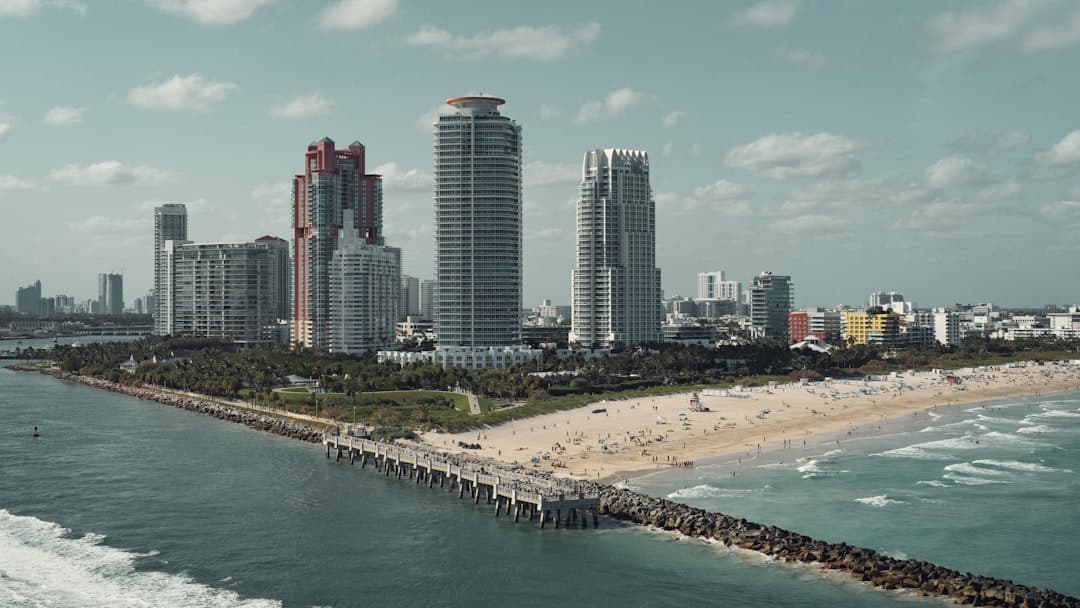
Photo: Sergio Arteaga / Unsplash